
A Guide to Choosing, Preparing, and Installing Industrial Shims
Shims are small components, but they play an important role in machinery alignment, equipment assembly, spacing, leveling, and precision adjustment. The right shim can help compensate for dimensional differences, establish the required clearance, or position a component accurately during installation.
But choosing and installing a shim is not a one-size-fits-all process.
Shim type, material, thickness, shape, load, equipment design, and operating environment all influence the right solution. Installation procedures should always follow the equipment manufacturer’s specifications and the requirements of the specific application.
What Is a Shim?
A shim is a thin piece of material used to fill a gap, adjust spacing, establish alignment, or compensate for dimensional differences between components.
Industrial shims can be manufactured from materials such as:
-
- Stainless steel
- Aluminum
- Brass
- Plastic
- Specialty materials selected for specific applications
They can also be supplied in different forms, including shim stock, pre-cut shims, slotted shims, washers, strips, and custom shapes.
The correct shim depends on what the application needs the shim to accomplish.
What Are Shims Used For?
Industrial shims are commonly used for:
Machinery Alignment: Shims can be placed beneath or between components to make precise alignment adjustments.
Equipment Leveling: Shims can help compensate for uneven surfaces or dimensional differences during equipment installation.
Motor and Pump Installation: Motor mount shims are commonly used to make vertical adjustments during machinery alignment.
OEM Assembly: Pre-cut shims can provide consistent, repeatable adjustments during equipment manufacturing and assembly.
Tooling and Production Equipment: Shims can establish precise spacing between components or tooling elements.
Maintenance and Repair: Shims can compensate for dimensional differences or restore required spacing during equipment repair.
What Are the Different Types of Shims?
There is no single “best” type of shim. Different applications call for different materials, shapes, and configurations.
Metal Shims
Metal shims are commonly selected for applications requiring strength, durability, dimensional stability, or resistance to demanding operating conditions.
Common materials include:
-
- Stainless steel
- Aluminum
- Brass
- Other specialty metals
Stainless Steel Shims: Often selected when durability and corrosion resistance are important.
Aluminum Shims: Provide a lightweight, rust-free option for applications where reducing weight or avoiding rust is important.
Artus also offers color-coded aluminum shim stock, making thickness identification faster and helping technicians select the correct shim with greater confidence.
Plastic Shims
Plastic shims are a lightweight, non-metallic option for applications where a non-marring material is preferred. Because plastic shim stock is impervious to oil, it is an excellent choice for many industrial and maintenance applications.
Artus offers color-coded plastic shim stock, allowing technicians to identify thicknesses quickly, reduce selection errors, and improve efficiency during installation and maintenance.
Pre-Cut Shims
Pre-cut shims are manufactured to specific shapes and dimensions and are ready to install.
They are particularly useful for:
-
- OEM assembly
- Repeat maintenance procedures
- High-volume production
- Standardized equipment installations
Because the dimensions are already established, pre-cut shims can eliminate the need to measure and cut shim stock during assembly.
Slotted Shims
Slotted shims have an opening that allows them to be installed around an existing fastener without completely removing the fastener.
This can make them useful for certain maintenance and alignment applications where accessibility or installation time is a concern.
The appropriate configuration depends on the equipment and the manufacturer’s requirements.
Shim Stock
Shim stock is supplied in sheets, rolls, or other forms that can be cut to the required dimensions.
Shim stock is particularly useful when:
-
- A custom shape is required
- A non-standard dimension is needed
- Multiple applications require different shapes
- Maintenance teams need flexibility
For repeatable applications, pre-cut shims may provide a faster and more consistent alternative.
How Do You Choose the Right Shim?
The right shim should be selected based on the application, rather than simply choosing the thinnest or strongest material available.
Consider these factors:
1. Required Thickness: Determine how much adjustment or spacing is needed.
For applications requiring precise gap measurement, a feeler gauge or another appropriate measurement tool can help establish the required thickness.
2. Material: Consider the environment and mechanical requirements.
Ask yourself:
-
- Is corrosion resistance important?
- Is weight a concern?
- Will the shim experience significant loads?
- Is a non-metallic material required?
- Will the shim be exposed to moisture, chemicals, or temperature changes?
3. Shape: Determine whether the application requires:
-
- Flat shims
- Slotted shims
- Washers
- Custom-cut shapes
- Other specialized configurations
4. Installation Requirements: Consider how the shim needs to be installed and whether access to the component is limited.
5. Repeatability: If the same adjustment will be performed repeatedly, pre-cut or color-coded shims may improve consistency and reduce setup time.
What Should You Do Before Installing a Shim?
Good shim installation starts before the shim is installed.
1. Understand the Application
Identify what the shim is intended to accomplish.
Is it being used for:
-
- Alignment?
- Leveling?
- Spacing?
- Clearance?
- Assembly adjustment?
- Compensation for a dimensional difference?
The answer influences the appropriate shim type and installation approach.
2. Check the Equipment Requirements
Always review the equipment manufacturer’s specifications, drawings, maintenance procedures, and applicable engineering requirements.
There may be specific requirements for:
-
- Shim material
- Maximum shim thickness
- Number of shims
- Contact area
- Fastener requirements
- Alignment tolerances
These requirements take precedence over general shim installation recommendations.
3. Measure the Required Adjustment
Use an appropriate measurement method for the application.
For very small gaps, feeler gauges can help determine the clearance between two surfaces before selecting the shim thickness.
4. Select the Shim
Choose the appropriate:
-
- Material
- Thickness
- Shape
- Size
- Quantity
General Shim Installation Best Practices
There is no universal shim installation procedure because the correct method depends on the application.
However, several general practices can help improve consistency.
Keep Contact Surfaces Clean: Remove dirt, oil, debris, burrs, and other contaminants that could prevent the shim from sitting flat.
Use Flat, Undamaged Shims: Bent, warped, damaged, or contaminated shims may not provide the intended adjustment.
Maximize Appropriate Contact: The shim should provide the appropriate contact area for the application. Avoid configurations that create unintended point loading or instability.
Minimize Unnecessary Stacking: When the application permits, using an appropriate single shim or a controlled shim combination can simplify installation and reduce opportunities for movement or error.
However, the acceptable number and combination of shims depends on the specific equipment and application.
Follow the Equipment’s Alignment Procedure: Shim installation is often one part of a larger alignment process. Complete the required measurements and verification steps specified for the equipment.
How Color-Coded Shims Make Installation Easier
One of the simplest ways to reduce shim selection errors is to make thickness identification immediate.
Artus color-coded shim stock uses color to identify thickness, allowing technicians to recognize the required material quickly without relying exclusively on small printed or stamped measurements.
For maintenance teams that regularly work with shims, this can help:
-
- Speed up thickness selection
- Reduce identification errors
- Simplify inventory management
- Improve technician consistency
- Make repeat adjustments easier
The benefit becomes particularly useful when multiple shim thicknesses are being used during the same maintenance or assembly process.
The Color Tells the Thickness.
When technicians are already familiar with the Artus color system, identifying a shim thickness becomes almost immediate.
Instead of stopping to read each piece or cross-reference multiple thickness markings, the technician can recognize the color and quickly select the required shim.
This creates a more seamless workflow from measurement → shim selection → installation.
What Should You Check After Shim Installation?
Installation is not necessarily the final step.
Depending on the application, post-installation verification may include:
Recheck Alignment: Confirm that the equipment meets the required alignment specifications after the shim has been installed.
Verify the Final Measurement: Repeat the appropriate measurement to confirm that the desired adjustment was achieved.
Inspect Shim Position: Make sure the shim remains properly positioned and has not shifted, folded, or become contaminated during installation.
Complete the Required Equipment Checks: Follow the manufacturer’s commissioning or maintenance procedure before returning equipment to operation.
Document the Adjustment: For recurring maintenance work, documenting shim thickness, location, and final measurements can help technicians reproduce the adjustment later.
Common Shim Installation Mistakes
Understanding what can go wrong is just as important as understanding what to do.
Choosing a Shim Based Only on Thickness: The required thickness is important, but material, shape, load, environment, and application requirements also matter.
Installing on Dirty Surfaces: Even small particles or debris can affect the final adjustment.
Using Damaged Shims: Bent or deformed shims may not provide consistent contact.
Guessing the Required Thickness: Whenever the application calls for a precise adjustment, measure rather than estimate.
Treating Every Shim Application the Same: A shim used for motor alignment may have very different requirements from one used in OEM assembly or tooling.
The application determines the appropriate installation method.
Frequently Asked Questions About Shims
What is the purpose of a shim?
A shim is used to adjust spacing, alignment, leveling, clearance, or fit between components. The specific purpose depends on the application.
What are the most common types of shims?
Common types include metal shims, plastic shims, stainless steel shims, aluminum shims, pre-cut shims, slotted shims, and shim stock.
How do I know what thickness shim I need?
The required thickness should be determined from the application’s specifications and appropriate measurements. A feeler gauge can be useful for measuring small gaps before selecting the shim.
Should I use one shim or multiple shims?
There is no universal answer. The acceptable configuration depends on the equipment design, required adjustment, load, and manufacturer’s specifications.
Are color-coded shims easier to use?
Color-coded shims can make thickness identification faster and reduce the need to cross-reference markings. Artus color-coded shim stock allows technicians familiar with the system to identify thickness by color.
Are aluminum shims rust-free?
Yes. Aluminum does not contain iron and therefore does not develop iron rust like steel. Aluminum can still oxidize and corrode under certain conditions, so material selection should always consider the complete operating environment.
What is the difference between shim stock and pre-cut shims?
Shim stock provides flexibility because it can be cut to a required shape or size. Pre-cut shims are manufactured to specific dimensions and are ready to install, making them particularly useful for repeatable applications and OEM assembly.
Shim Installation Depends on the Application
The most important thing to remember is that there is no universal shim installation method.
A motor alignment application, OEM assembly process, equipment leveling job, and tooling adjustment can all require different shim materials, shapes, thicknesses, and installation procedures.
The best approach is to:
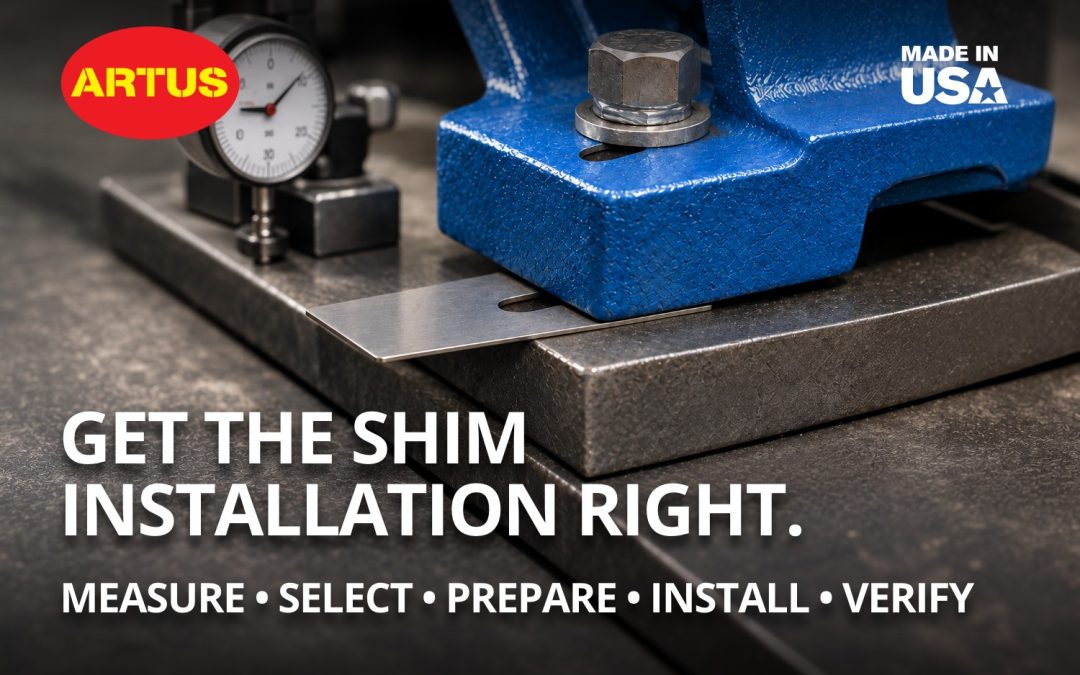
Measure → Select → Prepare → Install → Verify
Use the equipment manufacturer’s specifications and application-specific requirements to determine the correct procedure at each step.
For maintenance and assembly teams, standardized shim systems (particularly color-coded shims and pre-cut shims) can make that process faster, easier, and more repeatable.
Choose the Right Shim for Your Application
Artus Corporation manufactures a wide range of industrial shims and shim stock for machinery alignment, OEM assembly, maintenance, tooling, and other precision applications.
Artus solutions include:
-
- Color-coded plastic shim stock
- Metal shim stock
- Stainless steel shims
- Aluminum shims
- Motor mount shims
- Slotted shims
- Pre-cut shims
- Custom shims
The Artus Corporation
Whether you need a standard shim for a maintenance adjustment or a custom configuration for an OEM application, Artus can help you identify the appropriate solution for your requirements.
Need help selecting the right shim?
Browse Artus Products Online to find standard shim solutions for your application. For personalized assistance, call us at (201) 568-1000 or complete our RFQ form below.