
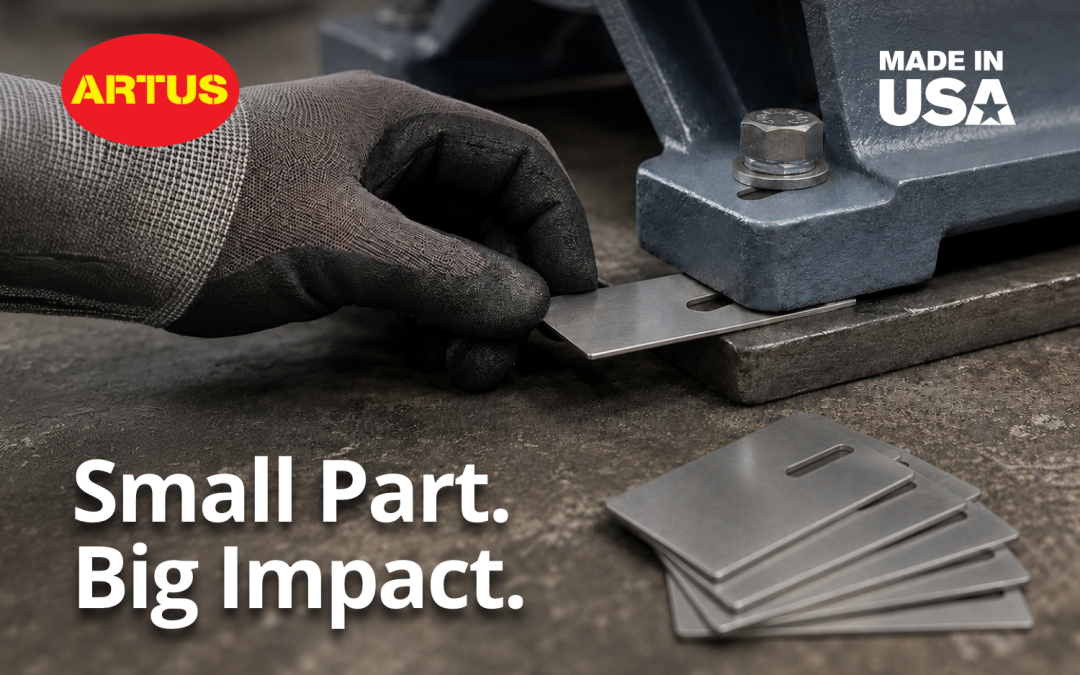
Industrial machinery depends on precision alignment, spacing, and adjustment. Whether correcting equipment height, aligning rotating machinery, or adjusting tooling setups, selecting the correct shim material directly affects reliability and repeatability.
But not all shims are designed for the same environment.
Understanding the differences between stainless steel shims, aluminum shims, and industrial shim kits helps maintenance teams choose the right solution for the application.
What Are Industrial Metal Shims?
Metal shims are thin precision components used to create accurate spacing, alignment, or leveling adjustments in industrial equipment.
They are commonly used in:
-
- machinery alignment
- motor mounting
- slitter tooling setups
- equipment leveling
- assembly and repair work
Shims help compensate for tolerance variations and allow precise mechanical adjustments without modifying equipment components.
Why Stainless Steel Shims Are Common in Industrial Applications
Among industrial shim materials, stainless steel shims are widely used because they combine:
-
- corrosion resistance
- strength
- dimensional stability
- long-term durability
Stainless steel maintains thickness consistency even in demanding environments involving:
-
- moisture
- oils and lubricants
- temperature variation
- frequent maintenance cycles
For many industrial applications, stainless steel provides a reliable long-term shim solution.
Stainless Steel Shims vs. Other Metal Shims
Different shim materials are suited for different operating conditions.
Best for:
-
- corrosive environments
- long-term machinery installations
- precision alignment applications
- washdown or humid environments
Advantages:
-
- corrosion resistant
- durable under load
- long service life
Best for:
-
- lightweight applications
- temporary adjustments
- quick machinery setup corrections
- environments where rust prevention matters
Advantages:
-
- lightweight
- easy to cut and handle
- rust-free and corrosion resistant
- cost-effective for certain applications
Best for:
-
- specialty spacing applications
- electrical isolation requirements
- custom machinery adjustments
Advantages:
-
- non-sparking options available
- specialized material properties
Common Machinery Applications for Industrial Shims
Industrial shims are used across manufacturing and maintenance operations.
Typical applications include:
Used to correct vertical alignment and eliminate soft foot conditions.
Machinery Leveling
Helps stabilize machinery bases and support frames.
Used to create accurate spacing between tooling components.
Maintenance Repairs
Allows technicians to compensate for wear or restore proper spacing.
Equipment Installation
Supports precision setup during machine commissioning.
Why Shim Kits Improve Maintenance Efficiency
Many facilities now standardize shim kits for machinery and industrial use to improve maintenance speed and consistency.
A well-organized shim kit helps teams:
-
- reduce setup time
- minimize shim selection errors
- improve technician consistency
- respond faster during repairs
Instead of searching for individual shim pieces, technicians can access organized thickness assortments immediately.
What to Look for in a Shim Kit
When selecting industrial shim kits, look for:
-
- multiple thickness options
- precision-manufactured tolerances
- organized storage and labeling
- corrosion-resistant materials
- repeatable thickness identification
For many facilities, color-coded shim systems, like the one we use at Artus, further improve setup efficiency and thickness identification.
Best Practices for Using Metal Shims
To improve accuracy and reliability:
-
- use the fewest shims necessary
- keep shim surfaces clean and flat
- avoid mixing damaged shim materials
- document shim thicknesses during alignment work
- standardize shim inventory across maintenance teams
Consistent shim practices lead to more repeatable equipment setups.
Why This Matters for Industrial Reliability
Improper spacing and alignment contribute to:
-
- vibration
- premature wear
- coupling failures
- tooling inconsistency
- increased downtime
Using the correct stainless steel and metal shims helps teams maintain alignment accuracy and improve machinery reliability over time.
Small adjustments often have a major impact on equipment performance.
The Artus Corporation
Artus Corporation manufactures precision stainless steel shims, brass shims, color-coded aluminum shims, shim stock, and shim kits designed for industrial machinery alignment, setup, and maintenance applications.
Order Online today. For personalized assistance, call us at (201) 568-1000 or complete our RFQ form below.